
A sore throat that doesn’t go away, a slightly hoarse voice, or a feeling that swallowing has become uncomfortable; these signs often seem minor at first. Many people ignore them, assuming they will settle with time, especially when the discomfort is not severe.
However, the throat is a sensitive area where even small, persistent changes can carry deeper meaning. When a symptom keeps returning or refuses to improve, it’s important to look beyond temporary relief and understand the root cause. This is where awareness of throat cancer causes becomes essential. Recognizing early risks can help people make informed decisions and take better care of their health.
In this blog, we will explore the key causes of throat cancer, common risk factors, and the early signs that should never be ignored.
What Is Throat Cancer?
Throat cancer develops when abnormal cells in the throat, voice box (larynx), or tonsils begin to grow uncontrollably. These changes usually don’t happen overnight. Instead, they build gradually, which is why early symptoms are often overlooked.
Since the throat plays a vital role in breathing, swallowing, and speaking, even a small issue can start affecting daily life in noticeable ways.
So, What Causes Throat Cancer?
There isn’t a single cause behind throat cancer. In most cases, it develops due to a combination of factors acting over time. Continuous irritation, unhealthy habits, infections, and environmental exposure can all contribute to changes in throat tissues.
When the lining of the throat is repeatedly exposed to stress, the cells may begin to change in unhealthy ways. That’s why doctors often assess multiple factors rather than focusing on just one cause. Early warning signals from the body are important and should not be ignored.
Smoking and Throat Cancer: A Strong Connection
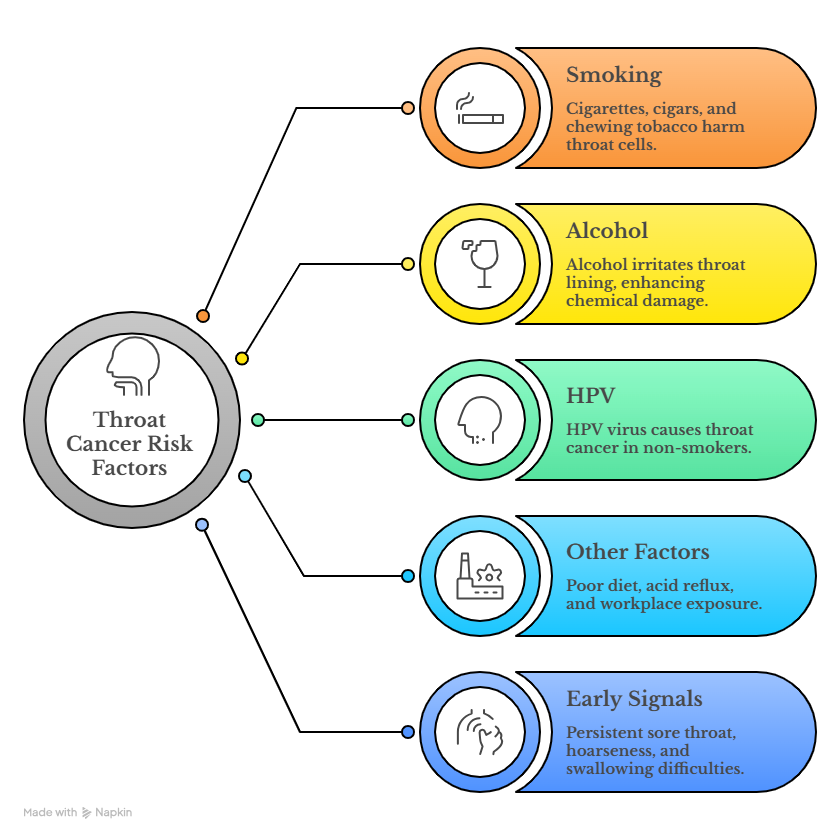
One of the most well-established links is between smoking and throat cancer. Tobacco products, whether cigarettes, cigars, pipes, or chewing tobacco, expose the throat to harmful chemicals repeatedly.
Over time, this constant irritation damages healthy cells and increases the risk of abnormal growth. Many people overlook chewing tobacco, but it can be just as harmful as smoking. The effects may not appear immediately, making long-term use especially dangerous.
Alcohol and Its Impact on the Throat
Alcohol is another major factor that contributes to throat irritation. It weakens the lining of the throat, making it more vulnerable to damage from harmful substances.
The risk becomes significantly higher when alcohol and tobacco are used together. This combination puts continuous stress on the throat, increasing the chances of developing serious conditions. That’s why throat cancer risk factors are often interconnected rather than isolated.
HPV Throat Cancer: An Overlooked Risk
A growing concern today is HPV throat cancer. Human papillomavirus (HPV) is a common infection, and many people may carry it without knowing. Certain strains of HPV can affect throat cells and lead to gradual changes over time.
What makes this important is that HPV-related throat cancer can occur even in people who do not smoke or drink. This shifts the common perception that throat cancer is only linked to lifestyle habits. Sometimes, hidden infections can also play a role.
Other Throat Cancer Risk Factors People Often Miss
Not all risks come from smoking or alcohol. A diet low in fresh fruits and vegetables may reduce the body’s ability to repair damage. Similarly, long-term acid reflux can continuously irritate the throat lining.
Workplace exposure is another overlooked factor. Regular contact with dust, chemicals, and industrial fumes can create long-term stress on throat tissues. These lesser-known elements also contribute to the overall causes of throat cancer.
Early Signs You Should Not Ignore
Throat cancer does not always begin with severe pain. Early signs can be subtle, such as:
- A persistent sore throat
- Hoarseness lasting for weeks
- Difficulty or discomfort while swallowing
- A lump in the neck
- Recurring throat irritation without a clear cause
These symptoms do not always indicate cancer, but ignoring them for too long can delay proper diagnosis.
When Should You See a Doctor?
If a throat-related issue continues for more than two to three weeks, it’s important to seek medical advice. This becomes even more crucial if the symptoms keep returning or feel different from a usual cold or infection.
Early consultation can provide clarity and help prevent unnecessary delays in care.
Conclusion
Understanding throat cancer causes helps people become more aware of their habits and health. It also makes it easier to recognise early warning signs, as the body often gives signals long before a serious condition develops.
The key takeaway is simple: avoid habits that strain the throat, stay alert to changes that don’t improve, and seek timely medical guidance when something feels unusual. Acting early can reduce stress, save time, and improve overall outcomes.
For personalized guidance, you can consider a VOPD (online video consultation) with expert doctors at Jeena Sikho HiiMS.

FAQs
1. What are the most common causes of throat cancer?
The most common causes include tobacco use, alcohol consumption, HPV infection, poor diet, and long-term irritation of the throat.
2. How are smoking and throat cancer related?
Smoking repeatedly exposes the throat to harmful chemicals, which can damage healthy cells and increase the risk of cancer over time.
3. Can HPV throat cancer occur in non-smokers?
Yes, HPV throat cancer can develop even in people who do not smoke or drink, making it an important risk factor to consider.
4. What are the early warning signs of throat cancer?
Common early signs include persistent hoarseness, difficulty swallowing, a sore throat, and lumps in the neck.
5. When should I consult a doctor for throat issues?
If symptoms last longer than two to three weeks or keep returning, it’s best to consult a doctor for proper evaluation.